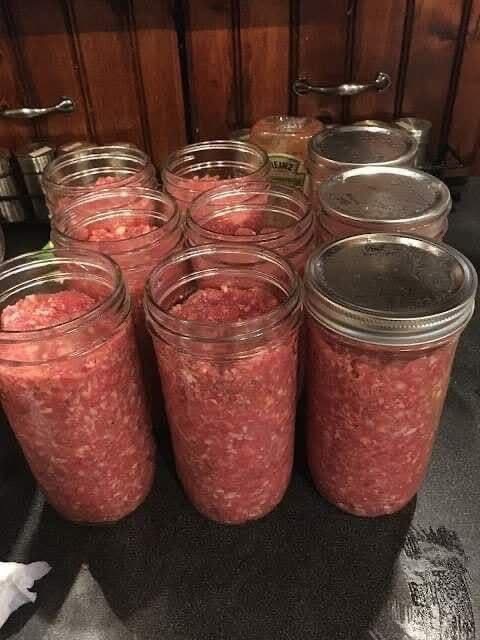
Canning homemade meatloaf is not recommended and is considered unsafe by current USDA and food safety guidelines.
Here’s a detailed explanation of why, along with safe alternatives.
Why Canning Meatloaf is Unsafe
- Density and Texture: Meatloaf is a dense, low-acid, mixed-ingredient product. It contains meat, breadcrumbs, eggs, vegetables (like onions, peppers), and often a tomato-based sauce. This density makes it nearly impossible for heat to penetrate evenly to the center of the jar during the pressure canning process.
- Inconsistent Heat Penetration: Even with pressure canning, the starchy fillers and thick texture can create pockets where bacteria (particularly Clostridium botulinum, which causes botulism) can survive. Botulism spores are only destroyed by sustained high temperatures reached in a pressure canner, and meatloaf’s composition prevents guaranteed uniform heating.
- No Tested or Approved Recipe: The USDA’s National Center for Home Food Preservation (NCHFP) and extension services have no tested, science-based process or recipe for canning meatloaf, patties, or any multi-ingredient, starch-thickened meat product. Canning must always follow rigorously tested recipes to ensure safety.
Safe Alternatives for Preserving Meatloaf
You have excellent options to enjoy homemade meatloaf long-term safely.
- Freezing (The Best & Easiest Method)
Freezing is perfectly suited for meatloaf and preserves its texture and flavor well.
· As a whole loaf: Bake the meatloaf completely, let it cool completely, then wrap it tightly in plastic wrap followed by heavy-duty aluminum foil or freezer paper. Label and freeze for up to 3-4 months.
· As individual slices: Slice the cooled, baked meatloaf. Place slices on a parchment-lined baking sheet to flash-freeze for 1-2 hours, then transfer to a freezer bag or vacuum-seal. This allows you to pull out just the number of servings you need.
· Raw for later baking: Shape the raw meatloaf mixture into a loaf on a freezer-safe pan or container. Freeze solid, then wrap tightly. Thaw in the refrigerator before baking as usual. You can also freeze raw mixture in a loaf pan lined with plastic wrap, then pop out the frozen block to wrap.
- Canning the Meat Component Only
If you want shelf-stable meat for quick meals, you can safely can plain ground meat or meatballs (without fillers) using a USDA-approved method.
· Process: Brown the ground meat (optional), pack into hot jars, leaving 1-inch headspace. Add salt if desired, but no other ingredients. Cover with boiling water, broth, or tomato juice (follow a tested recipe). Process in a pressure canner (not a water bath) for the specified time for your jar size and altitude.
· Use: You can then use this canned ground meat to quickly make a meatloaf by adding fresh binders (breadcrumbs, egg, etc.) and baking. This is safer because the plain meat processes uniformly.
If You Absolutely Must Can: The Only Safe Approach
The only way to incorporate safely canned ingredients into a meatloaf-like product is to can the individual, approved components separately and combine them when you’re ready to cook.
- Can plain ground beef or pork (as described above).
- Can tomato sauce or diced tomatoes (using a tested recipe, often with added acid).
- On the day of cooking: Open your jars of canned meat and tomato product. Combine them with fresh breadcrumbs, fresh eggs, fresh sautéed vegetables, and seasonings. Then bake as you normally would.
Key Safety Principles to Remember
· Never can anything with flour, breadcrumbs, rice, pasta, milk, or thickeners (like cornstarch) unless using a specific, tested recipe for that product (e.g., some approved soups). These ingredients change heat penetration dynamics.
· Always use a pressure canner for low-acid foods (meat, vegetables, soups). A water bath canner is only for high-acid foods like fruits, pickles, and jams.
· Trust reliable sources: Only use recipes from the USDA, the National Center for Home Food Preservation (NCHFP), or your state’s Extension Service. Blogs and old family recipes may not be safe.
Bottom Line
Do not can homemade meatloaf. The risks of botulism and spoilage are unacceptably high due to its dense, multi-ingredient nature.
Opt for freezing instead. It’s simple, safe, and preserves the quality of your meatloaf perfectly. For shelf-stable convenience, can plain ground meat and assemble your meatloaf fresh when ready to bake.
Stay safe and enjoy your homemade cooking with peace of mind!