Complete Culinary Breakdown of the Lobster: Every Edible Part Explained for Cooking, Flavor, and Professional Kitchen Use
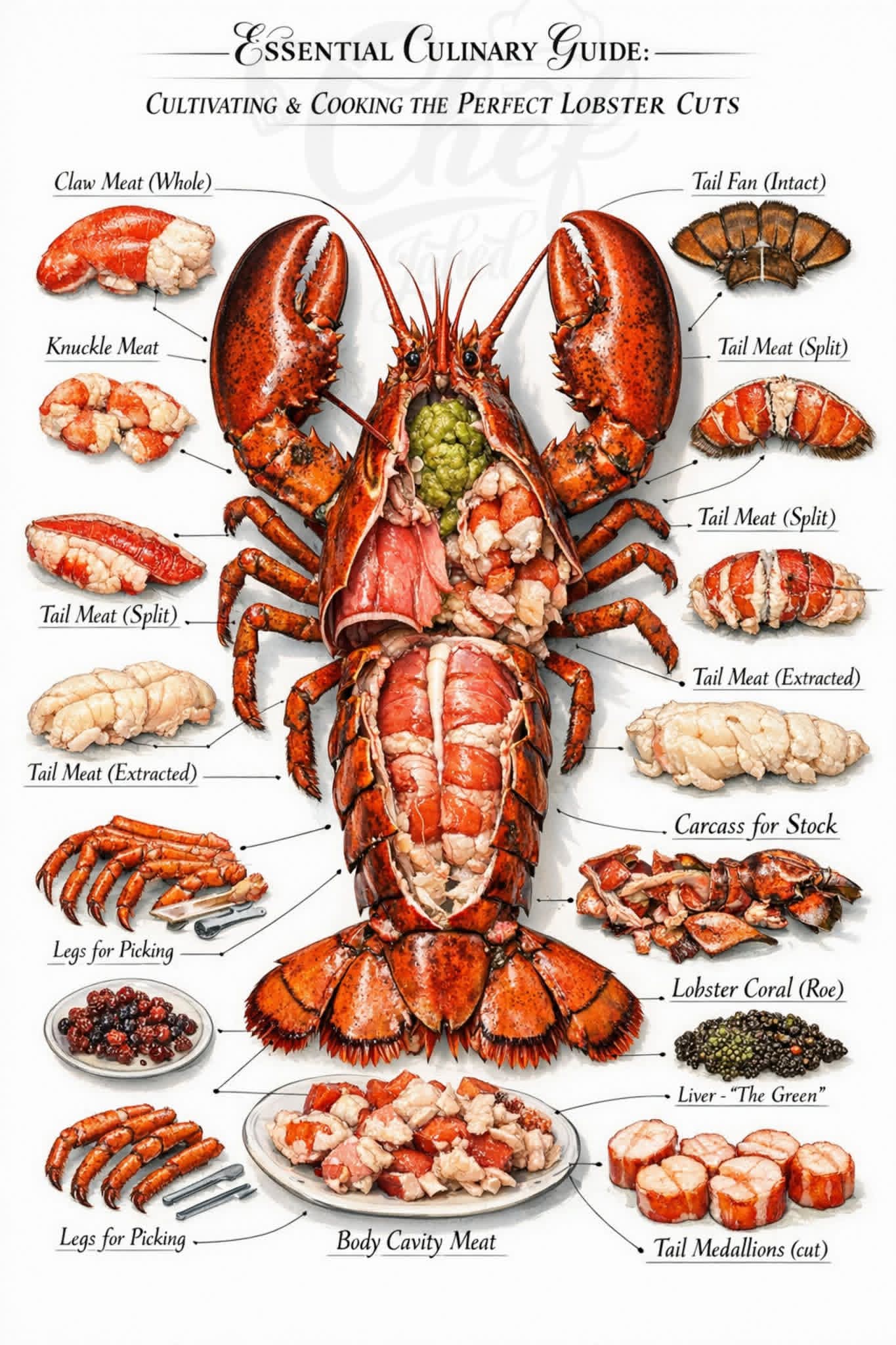
This visual culinary guide shows the full anatomy of a lobster and highlights every valuable cut used in professional kitchens and seafood preparation. Understanding each section of the lobster helps chefs maximize flavor, reduce waste, and prepare premium seafood dishes with precision. From the claws to the tail and even the internal delicacies, every part has a specific culinary purpose.
Claw Meat (Whole)
The large claws contain one of the most prized lobster meats. Claw meat is firm, slightly fibrous, and naturally sweet. It is often served whole in fine dining lobster plates, lobster rolls, seafood platters, or butter-poached preparations.
Knuckle Meat
Located between the claw and the body, knuckle meat is softer and extremely flavorful. Although smaller in quantity, it is highly valued for its tenderness and is commonly used in lobster salads, pasta, risotto, and bisque.
Tail Fan (Intact)
The tail fan is the end section of the lobster tail. While it contains little meat, it is visually distinctive and often kept intact for presentation when serving whole lobster dishes.
Tail Meat (Split)
When the lobster tail shell is cut open, the meat can be split for grilling, roasting, or broiling. This technique allows even cooking and better seasoning absorption, making it a favorite method in restaurants.
Tail Meat (Extracted)
Once removed from the shell, the tail produces the largest single portion of lobster meat. It is thick, tender, and perfect for sautéing, grilling, butter poaching, or slicing for high-end seafood dishes.
Tail Medallions (Cut)
Tail meat can also be sliced into medallions. These round pieces are often used for elegant plating in gourmet seafood dishes, surf-and-turf plates, and lobster thermidor preparations.
Legs for Picking
Although small, lobster legs contain delicate strands of meat that can be extracted by cracking or rolling them. This meat is often used in soups, seafood stuffing, or mixed seafood dishes.
Body Cavity Meat
Inside the main body cavity of the lobster are small clusters of tender meat. Skilled chefs remove this meat carefully because it contributes excellent flavor to seafood mixtures and fillings.
Carcass for Stock
After the edible meat is removed, the shell and remaining carcass are extremely valuable for making lobster stock. The shells are simmered with aromatics to produce a rich seafood base used in bisque, chowder, and sauces.
Lobster Coral (Roe)
Lobster coral refers to the roe found in female lobsters. When cooked it turns a deep red color and adds intense seafood flavor. It is often blended into sauces, compound butter, or luxury seafood dishes.
Liver – “The Green” (Tomalley)
The soft green organ known as tomalley acts as the lobster’s liver and pancreas. It has a rich, buttery seafood taste and is sometimes used as a flavor enhancer in sauces or spread on seafood dishes.
This complete lobster guide demonstrates how professional chefs break down a lobster to utilize every edible component. From claw meat and knuckle meat to tail medallions and lobster coral, each part plays a role in creating rich seafood dishes, gourmet restaurant plates, and classic lobster recipes around the world.